



Your bookkeeper can then correctly classify those types How to Meet Your Bookkeeping Needs of transactions. Source documents are original records containing details of a transaction. Ideally, update records daily or weekly to stay on top of your finances. Monitoring it helps you plan for expenses and avoid cash shortages. Taxfyle connects you to a licensed CPA or EA who can take time-consuming bookkeeping work off your hands. It’s not a book for beginners but for those already practicing bookkeeping professionally.

Reconciling your accounts
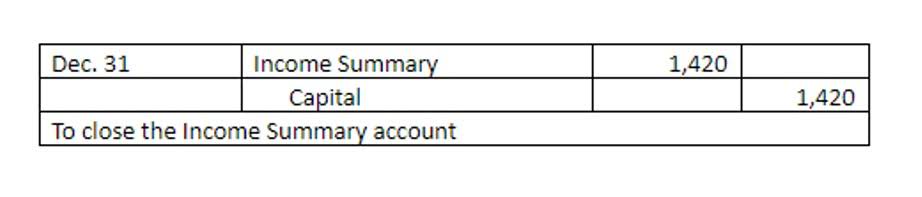
It lists out the revenues and expenses and spits out a profit or loss. The revenue section may be broken down further into specific types of income based on products or services. The first component of the income statement is revenue (a.k.a. the top line). It is the dollar amount of product or service sold at a given time. The assets are listed first and liabilities and equity are listed last. The income statement is income summary also known as the profit and loss statement.
Balance Sheet

The cash flow statement shows how transactions from the balance sheet and income statement affect your cash account. By keeping these tips in mind, you’ll find managing your business’s finances easier and less stressful. Whether you handle bookkeeping yourself or get outside help, the key is to stay informed and make smart decisions for your business.

Bookkeeping Basics: What Is It and Why Is It Important?
By understanding basic bookkeeping, your small business will survive and thrive on the high seas of commerce. Mastering the basics of bookkeeping is an essential step toward effective financial management. Stay tuned for Part 2, where we’ll delve deeper into advanced bookkeeping topics. This article will delve into the bookkeeping basics for small business owners.
- We’ll also shed light on how these principles are applied in bookkeeping services offered at NexaBooks.
- Modern software can automate much of this process, reducing errors and saving time.
- Basic bookkeeping entails the documentation and arrangement of a business’s financial dealings.
- By keeping the balance of the accounting equation, businesses can ensure the accuracy and reliability of their balance sheet.
- Every bookkeeper knows the feeling of being compared with a data entry operator.
Accountants, on the other hand, are tasked with interpreting the information and data provided by bookkeepers. Individuals in an accounting role use this data to perform Accounting for Technology Companies complex financial analyses that enable strategic decision-making based on a company’s financial state. By maintaining clear separation, you’ll simplify your bookkeeping and have a more accurate picture of your business’s financial health.
- Ensure that all transactions are precisely documented and reconciled per the accounting equation.
- Next, set aside a dedicated time either weekly or biweekly to review your bookkeeping, reconcile transactions and complete necessary data entry.
- Since bookkeeping is a more straightforward process than accounting, it is something that many people can (and do) opt to take care of themselves.
- When it comes to execution, there are a few bookkeeping methods to consider.
- Activities like selling products or services would be considered cash flows from operating activities.